Page 13 of 16

Alice Paul (January 11, 1885-July 9, 1977)

You guys didn’t actually think I’d forget Women’s History Month, did you? No, I didn’t think so! :*)
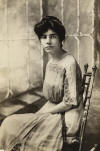
Alice Paul was the architect of some of the most outstanding political achievements on behalf of women in the 20th century. Born on January 11, 1885 to Quaker parents in Mt. Laurel, New Jersey, Alice Paul dedicated her life to the single cause of securing equal rights for all women.

Alice’s father was a successful businessman and acted as the president of the Burlington County Trust Company in Moorestown, NJ. As Hicksite Quakers, Alice’s parents raised her with a belief in gender equality, and the need to work for the betterment of society. Hicksite Quakers stressed separation from the burgeoning materialistic society and advocated the benefits of staying close to nature.

Alice was an excellent student, a voracious reader, and played several extracurricular sports in school including basketball, baseball and field hockey. She graduated from Swarthmore college in 1905.

In 1907 Alice left home for Birmingham, England to study social work, and it is there that she became a militant suffragist.

In 1912, Alice Paul and two friends, Lucy Burns and Crystal Eastman, headed to Washington, D.C. to organize for suffrage. Paul and Burns organized a publicity event to gain maximum national attention; an elaborate and massive parade by women to march up Pennsylvania Avenue and coincide with Woodrow Wilson’s presidential inauguration. The parade began on March 3, 1913, with the lawyer, activist, and socialite Inez Milholland, leading the procession, dressed in Greek robes and astride a white horse. The scene turned ugly, however, when scores of male onlookers attacked the suffragists, first with insults and obscenities, and then with physical violence, while the police stood by and watched.

In 1917, Paul and several other well known suffragists picketed President Wilson at the onset of World War I and were sent to Occoquan Workhouse, a prison in Virginia. Paul and her compatriots followed the English suffragette model and demanded to be treated as political prisoners and staged hunger strikes. For staging hunger strikes, Paul and several other suffragists were forcibly fed in a tortuous method. Prison officials removed Paul to a sanitarium in hopes of getting her declared insane. When news of the prison conditions and hunger strikes became known, the press, some politicians, and the public began demanding the women’s release; sympathy for the prisoners brought many to support the cause of women’s suffrage.

In 1917, in response to public outcry about the prison abuse of suffragists, President Wilson reversed his position and announced his support for a suffrage amendment, calling it a “war measure.” In 1919, both the House and Senate passed the 19th Amendment and the battle for state ratification commenced. Three-fourths of the states were needed to ratify the amendment. The battle for ratification came down to the state of Tennessee in the summer of 1920; if a majority of the state legislature voted for the amendment, it would become law. The deciding vote was cast by twenty-four year-old Harry Burn, the youngest member of the Tennessee assembly. Originally intending to vote “no,” Burn changed his vote after receiving a telegram from his mother asking him to support women’s suffrage. On August 18, 1920, Tennessee ratified the 19th Amendment. Six days later, Secretary of State Colby certified the ratification, and, with the stroke of his pen, American women gained the right to vote after a seventy-two year battle. August 26th is now celebrated as Women’s Equality Day in the United States.
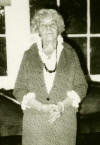
Few individuals have had as much impact on American history as has Alice Paul. Her life symbolizes the long struggle for justice in the United States and around the world. Her vision was the ordinary notion that women and men should be equal partners in society.

P.S. There is a great movie about Alice Paul’s struggles, starring Hillary Swank. It’s called IRON JAWED ANGELS. Loved it! :*)

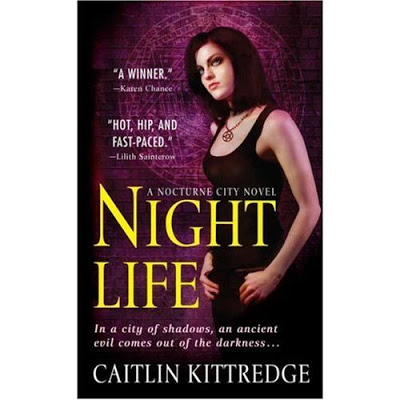
NIGHT LIFE

Luna Wilder (love that name!) is a smart, tough, police officer. She’s also a Insoli werewolf who travels without a pack and has to rely on instinct alone. And she’s just been assigned to find the ruthless killer behind a string of ritualistic murders-a killer with ties to an escaped demon found only in legend…until now.
This is the first book in Caitlin’s Nocturne City series. It is full of werewolves, black magicians, and witches.

Doesn’t all this sound wonderful?


I remember when Caitlin first snagged Rachel Vater as her agent, and I’ve watched her journey from query letter to published novel since August 2006. This is my interview with the author of Night Life:
1.) Demon Hunter: What first sparked your interest in writing?

Caitlin Kittredge: My mother was a librarian, and I was homeschooled, so I spent a lot of time reading fiction, especially fantasy fiction, and I decided at about age 13 that was what I wanted to do with my life. Storytelling always came naturally to me–I would make up elaborate roleplays for my friends and I when I was a kid, and they’d go on for days–so novel-writing was a natural extension of that early instinct.
2.) DH: Why do you write urban fantasy?
CK: I like fantastic fiction, but I also like stories that are grounded in reality, so urban fantasy was the niche for me. I think it’s fascinating to look down a dark alley or around a corner and see things that may or may not be real, or to read graffiti as an incantation to an old god, or to wonder what those iron bars on someone’s windows are REALLY keeping out.
3.) DH: Who are some of your writing influences?
CK: I’m very heavily influenced by noir fiction, from the school of Chandler and Hammet–bad people, mean streets, gorgeous dames, the hero who doesn’t know she’s a hero, to paraphrase Frank Miller. I’m also a big fan of Neil Gaiman, both his prose work and his /Sandman/ comics. He has a way of injecting both the sublimely fantastic and the terrifying unknown into everyday events that I really love.
4.) DH: How did you come to create Luna’s character?
CK: I wrote the sort of character that I wanted to read about, but wasn’t finding in urban fantasy at the time. I’ve always enjoyed reading about real women with real problems, and romances, and lives, and I endeavored to write Luna as someone very flawed, very relatable and real but ultimately with the smarts and strength to come out on top.
5.) DH: Why did you choose to write about werewolves?
CK: I love shapeshifters, their mythology and their history is really fascinating and full of great tidbits that I used in my worldbuilding. I’m also fascinated by the theme of duality, which you can really dig into with a shapeshifter character, and the line between human and monster, and how sometimes the worst monsters are the ones who don’t have a beast under their skin at all.
Thanks so much for taking the time out of your busy schedule for the interview, Caitlin! Night Life officially went on sale March 4, 2008, so if you haven’t bought it yet, go forth and purchase it! You won’t be disappointed! :*)

Villains!

There have been a multitude of villains in the history of horror novels and movies. Some were obvious monsters, while others were not.


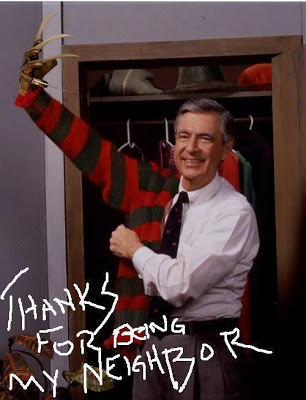
I used to love Freddy Krueger because he talked a lot of trash to his intended victims, which at times, was quite amusing. On the other hand, Jason Vorhees was creepy because he never uttered a word.

I like different villains for various reasons. The best villain is sometimes the least obvious evil-doer, (note picture above) which makes the story all the more satisfying. Don’t get me wrong, I love strong heroines/heroes, but if the villain is more interesting, my attention will be more focused on what they’re doing.

These are just a few of my favorite movie villains in no particular order:

1.) Angela Franklin (Night of the Demons)
2.) Pinhead (Hellraiser 1&2)
3.) Chucky (Child’s Play)
4.) Hannibal Lector (Silence of the Lambs & Hannibal)
5.) Mary Brady (Sleepwalkers)

Who are some of your favorite villains? From either books or movies?

Paul Laurence Dunbar (June 27, 1872-Feb. 9, 1906)

Paul Laurence Dunbar was the first African-American poet to garner national critical acclaim. Dunbar penned a large body of dialect poems, standard English poems, essays, novels and short stories before he died at the age of 33. His work often addressed the difficulties encountered by African-Americans to achieve equality in America. He was praised both by the prominent literary critics of his time and his literary contemporaries. His mother was a former slave and his father had escaped from slavery and served in the 55th Massachusetts Infantry Regiment and the 5th Massachusetts Colored Cavalry Regiment during the Civil War.


Here is my favorite poem by Mr. Dunbar:

We wear the mask that grins and lies,
It hides our cheeks and shades our eyes,–
This debt we pay to human guile;
With torn and bleeding hearts we smile,
And mouth with myriad subtleties.
Why should the world be overwise,
In counting all our tears and sighs?
Nay, let them only see us, while
We wear the mask.
We smile, but, O great Christ, our cries
To thee from tortured souls arise.
We sing, but oh the clay is vile
Beneath our feet, and long the mile;
But let the world dream otherwise,
We wear the mask!

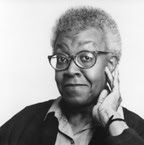
Gwendolyn Brooks (June 7, 1917-December 3, 2000)

Gwendolyn Brooks was born in Topeka, Kansas and raised in Chicago. She is the author of more than twenty books of poetry, including, Children Coming Home (The David Co., 1991); Blacks (1987); To Disembark (1981); The Near-Johannesburg Boy and Other Poems (1986); Riot (1969); In the Mecca (1968); The Bean Eaters (1960); Annie Allen (1949), for which she received the Pulitzer Prize; and A Street in Bronzeville (1945).

This is my favorite poem by Ms. Brooks:

We Real Cool
THE POOL PLAYERS.

SEVEN AT THE GOLDEN SHOVEL.

We real cool.

We Left school.

We Lurk late.

We Strike straight.

We Sing sin.

We Thin gin.

We Jazz June.

We Die soon.

Langston Hughes (February 1, 1902-May 22, 1967)

Langston Hughes was one of the most important writers and thinkers of the Harlem Renaissance, which was the African-American artistic movement in the 1920s that celebrated black life and culture. Through his poetry, novels, plays, essays, and children’s books, he promoted equality, condemned racism and injustice, and celebrated African-American culture, humor, and spirituality.


Here’s my favorite poem by Mr. Hughes:

Mother To Son
Well, son, I’ll tell you:
Life for me ain’t been no crystal stair.
It’s had tacks in it,
And splinters,
And boards torn up,
And places with no carpet on the floor —
Bare.
But all the time
I’se been a-climbin’ on,
And reachin’ landin’s,
And turnin’ corners,
And sometimes goin’ in the dark
Where there ain’t been no light.
So boy, don’t you turn back.
Don’t you set down on the steps
‘Cause you finds it’s kinder hard.
Don’t you fall now —
For I’se still goin’, honey,
I’se still climbin’,
And life for me ain’t been no crystal stair.

Maya Angelou (April 4, 1928- )

In celebration of Black History Month, I have decided to feature four poets whom I admire. I’ll feature a different poet each week during the month of February. I love poetry and will post my favorites by each poet. Please remember that Black History is everyone’s history.


Dr. Maya Angelou, a.k.a., Marguerite Johnson, is world renowned. She is a poet, educator, historian, best-selling author, actress, playwright, civil-rights activist, producer and director. She is a knowledgable and phenomenal woman. Here’s my favorite poem by Dr. Angelou:

Phenomenal Woman
Pretty women wonder where my secret lies
I’m not cute or built to suit a model’s fashion size
But when I start to tell them They think I’m telling lies.
I say It’s in the reach of my arms
The span of my hips
The stride of my steps
The curl of my lips.
I’m a woman Phenomenally Phenomenal woman
That’s me.
I walk into a room Just as cool as you please
And to a man
The fellows stand or Fall down on their knees
Then they swarm around me A hive of honey bees.
I say It’s the fire in my eyes
And the flash of my teeth
The swing of my waist
And the joy in my feet.
I’m a woman Phenomenally Phenomenal woman That’s me.
Men themselves have wondered
What they see in me
They try so much
But they can’t touch
My inner mystery.
When I try to show them
They say they still can’t see.
I say It’s in the arch of my back
The sun of my smile
The ride of my breasts
The grace of my style.
I’m a woman Phenomenally Phenomenal woman
That’s me. Now you understand
Just why my head’s not bowed I don’t shout or jump about
Or have to talk real loud
When you see me passing
It ought to make you proud.
I say It’s in the click of my heels
The bend of my hair
The palm of my hand
The need for my care.
‘Cause I’m a woman Phenomenally
Phenomenal woman
That’s me.

Happy Bloggerversary!

Hi guys. I just wanted to let you guys know that it’s my one year blog anniversary. The official date was yesterday, but I couldn’t get to a computer, so I’m posting it today! Yay! Celebrate with me if you will!

American Idol-Season 7

In honor of American Idol’s Season 7 premiere tonight, I just couldn’t help but share this little gem that was e-mailed to me sometime last year. I’m not endorsing any reality show, whatsoever. I only watch Idol during the first few weeks so that I can laugh at all the awful singers who audition and get upset even though they suck.

This clip is from the Malaysian Idol (yes, several countries have them now!). This guy is trying his hand at BILLIE JEAN. Talk about scary! He looks scary and sounds scary. Come to think of it, he actually looks like one of the zombies from Michael Jackson’s video, THRILLER. Most likely he just couldn’t get any work after the video and just decided to audition for Idol. LOL. Enjoy!

Cursed Day Job!

First of all, Happy New Year again—I’m back! As for my topic, I’m sure every writer out there wishes that he/she could write full time and not have to worry about working, but it’s just not a reality when you have bills to pay. Unless you’re lucky enough to have someone else to pay your bills for you. I work and write full time. I am unpublished but I write every day so that that will change.

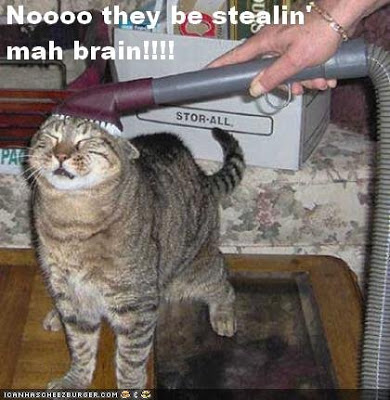
Working at a stressful job is quite draining and it tries to stifle your creativity. Notice I said, “tries” to stifle. You cannot allow the work day to ruin your writing at night or whenever you write. You have to relax and realize your dreams. Don’t get me wrong, sometimes writers feel A LOT like this at work:

I promised myself that I wouldn’t make any resolutions because most people never keep them, but since my other writer friends have posted theirs, I’ll post what my plans are for 2008. These are in no way resolutions, just goals:
1.) Polish my completed novel (which I am almost done with!)
2.) Give to betas (who will edit thoroughly)
3.) Query agents (and get one this year)
4.) Get a book deal? (hopefully)
Numbers 1 & 2 are the easy part, 3 & 4, not so much, but I believe in my work and as Miss Snark would say, “Good writing trumps all!” With that being said, go forth and follow your dreams, whether you’re a writer or not! :*)